Over the school holidays, I took my niece rock climbing. It has been a while since I last climbed but the whole experience went pretty well. My niece had a blast (told her Mum it was ten out of ten) and I felt like the best aunt in the world. I even managed to climb a few routes myself – ten in total if Garmin was counting correctly. They were all pretty easy routes – the kind we used to describe as “ladders” back in my climbing hey day. I did attempt one or two more “challenging” routes that I failed to complete but I didn’t persist with them. All in all, it was a fairly relaxing afternoon as far as climbing sessions go.
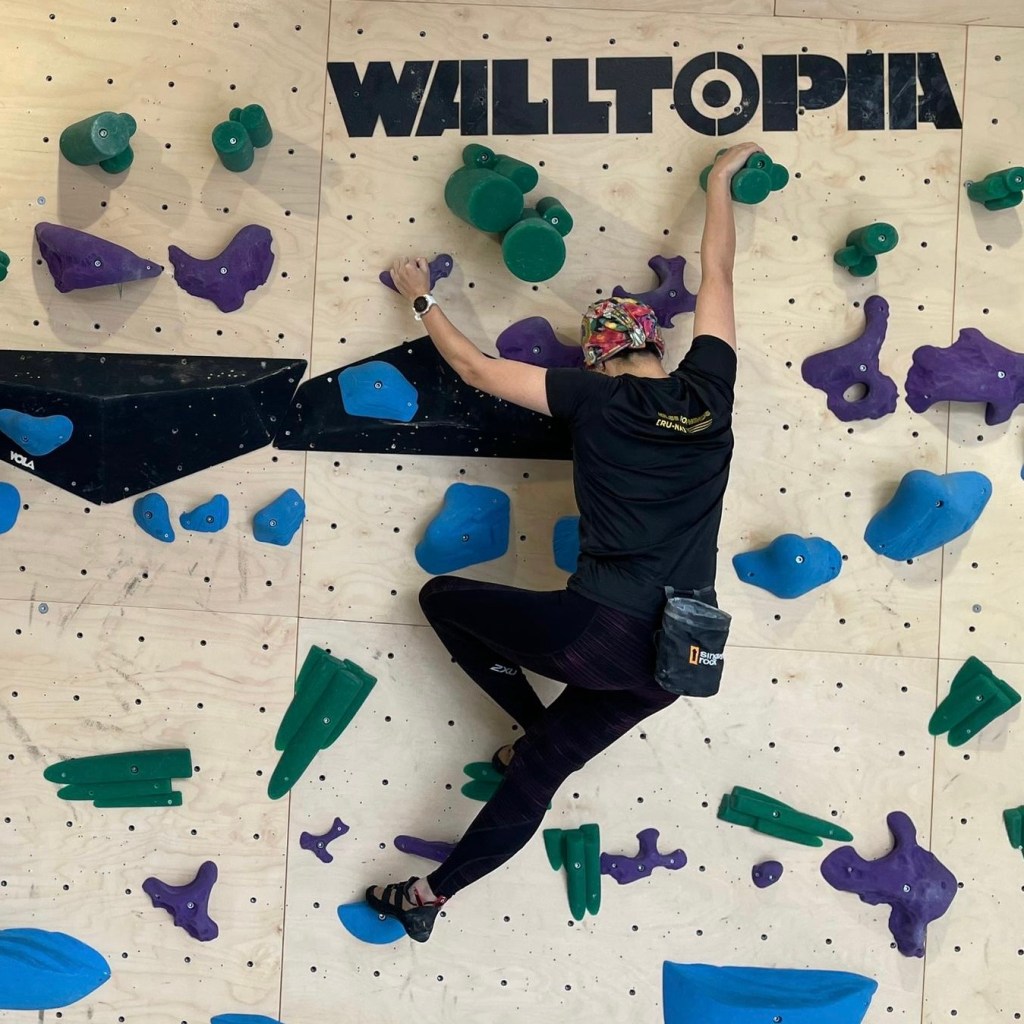
Everything felt fine during and after climbing and I went to sleep without issues. In the middle of the night, I rolled onto my left shoulder and pain woke me up. It was not terrible pain but it was uncomfortable enough for me to spend the rest of the night on my back. The next morning, my shoulder was still uncomfortable when I lifted my arm and the pain radiated down to my left elbow. It was not DOMS or any familiar ache I’ve experienced post workout. It was a discomfort that felt wrong – the kind I associate with an injury.
Shoulder Injuries Related to Climbing
I consulted Dr Google (yes, I know, this is not a replacement for a real doctor’s advice but my pain was not severe and my arm function, while uncomfortable, was not compromised) and these were the most likely culprits based on my symptoms:
1. Rotator Cuff Strain or Tendinopathy
- Caused by: Overhead pulling (common in climbing) which stresses the rotator cuff muscles (especially the supraspinatus).
- Symtoms: Pain when lifting the arm, sometimes radiating to the upper arm or elbow. Often sore at night when lying on the affected side.
2. Biceps Tendon Irritation (Bicipital Tendinitis)
- Anatomy: The long head of the biceps runs through the front of the shoulder.
- Symptoms: Pain may radiate down to the elbow since the tendon attaches there. Often worse with overhead pulling/climbing.
Could it be a combination of both? Definitely. Pain lifting overhead is common in both rotator cuff strain and biceps tendon irritation. Radiation to the elbow is more biceps tendon irritation since rotator cuff pain usually stays near the shoulder or upper arm. Soreness when lying on the shoulder is very common in rotator cuff strain, but it is also aggravated if the biceps tendon sheath is inflamed.
It is likely that the primary issue is a rotator cuff irritation/impingement, leading to secondary biceps tendon irritation having to work overtime and being compressed. The rotator cuff stabilises the ball of the shoulder joint and the long head of the biceps also acts as a stabiliser, especially in overhead positions. If the rotator cuff is weak or strained, the biceps tendon will pick up extra load, leading to irritation. Since the biceps tendon runs right next to the rotator cuff tendons, if there is an impingement, both can end up being affected.
How Does Climbing Cause This?
Rotator Cuff Strain: The rotator cuff (supraspinatus, infraspinatus, teres minor, subscapularis) works like the “steering muscles” of the shoulder. They don’t generate a lot of power, but they are required to stabilise the ball of the humerus in the socket during every pull, reach, or lock-off we make during climbing. Since climbing requires repeated overhead reaching and pulling movements (especially if we pulled hard), the supraspinatus tendon that sits on top of the shoulder would have been irritated.
Biceps Tendon Irritation: The long head of the biceps tendon runs up the front of the arm, through a groove in the upper humerus, and attaches inside the shoulder socket. It acts as both an elbow flexor (bending arm) and a shoulder stabiliser, especially when the arm is in overhead positions. Climbing requires us to reach up high and pull. When we lock off to hold ourselves close to the wall, the biceps tendon has to work hard to stabilise the humeral head in the socket. The repeated loading that occurs during climbing leads to irritation.
Climbing increases the risk of microtears or overload especially if we haven’t been climbing for a while because the tendon/muscle tissues will not be conditioned to the stresses placed on them. What compounds the issue when climbing are the dynamic/awkward movements involving lunging, twisting, and/or holding our body weight in odd positions. I believe this is exacerbated in former climbers because we have the knowledge of movement but not necessarily the physical capacity to make them since our bodies are no longer adapted to handle them.
Although it is not specifically related to climbing, compression and impingment of the tendon during sleep can also worsen the injury. After climbing, our shoulder tissues will swell a little. Sleeping directly on the shoulder (or with the arm overhead) can compress the tendon further, making it hurt.
Why Now?
The biggest question in my head was: why now? I’ve taken plenty of long breaks from rock climbing in the past and I have never experienced an injury of this kind before. Back when I was a climber, my nickname was “Gung Ho” because I never went easy. Every climbing session was about climbing as much as I could within the limited time I had with the wall. If I was going to experience an injury like this, it should have happened before now. So what is different?
My age: I have crossed over into my late 40s and the age-related changes to my tendons are making themselves felt. The rotator cuff tendon has become less elastic and is more prone to degeneration (“tendinopathy” instead of a fresh strain). The biceps tendon is especially vulnerable because it has a relatively poor blood supply. The same climbing forces that I absorbed easily when I was “younger” are now perceived as a bigger load, irritating my tendons beyond their recovery ability.
With age, small bone spurs or narrowing of the subacromial space can also develop, making it easier for tendons to get pinched during overhead moves. Muscle balance also shifts, with stabiliser muscles (rotator cuff, scapular muscles) weakening faster than the big mover muscles (lats, pecs, biceps). This forces the stabilisers to work overtime to make up the difference. When we add slower recovery and inflammation control to the mix, the micro-injuries from climbing that used to calm down overnight now lasts longer.
Perimenopause: Hormonal changes in perimenopause further aggravate tendon/muscle health. With the decline of estrogen (which helps to maintain collagen, the main structural protein in tendons/ligaments), our tendons become even more vulnerable (as if age alone wasn’t enough). The lower estrogen means our tendons are less elastic, stiffer, and slower to repair – this makes them more prone to overload from climbing. But that’s not all – estrogen also supports muscle protein synthesis. During perimenopause, muscle recovery is slower and our strength declines faster (especially if not maintained). This increases the likelihood that stabilising muscles like the rotator cuff and scapular stabilisers are not able to keep up with climbing loads.
But wait! There’s even more! Perimenopause causes a host of other issues that add to the storm, such as:
- Joint and tissue irritability – partly due to hormonal changes, and partly due to reduced hydration of the connective tissue.
- Sleep changes that lowers pain tolerance and recovery so our shoulder soreness feels worse and lingers for longer.
- Microchanges in bone and soft tissue – subtle cartilage changes can make the shoulders/joints less forgiving under sudden stress created by climbing.
What Can We Do About It?
The same thing we do with just about every other activity we engage in now that we are older: we must treat warm-up, strength maintenance, and recovery as part of climbing, and not optional extras. Well, these ought to be compulsory even for the youngsters but try telling that to them and see if they will listen. I know I never did until my body made me listen.
Since I am already injured, rehab comes first. This routine can also be treated as “prehab” (which is basically a form of intervention that takes place before an event to prevent complications and improve recovery).
Rehab / Prehab
This should be done daily or on non-climbing days for 10 to 15 minutes. The focus is to keep mobility, strengthen the stabilisers, and reduce tendon load.
Mobility and Activation
- Pendulum Swings: 20 second circles clockwise and counter clockwise.
- Scapular Squeezes: 10 to 12 reps, hold for 3 seconds.
- Doorway Pec Stretch: 20 to 30 seconds on each side.
Strength and Stability
- External Rotation with Band (elbow tucked): 2 x 12 each arm.
- Biceps Controlled Curl (light weight or band): slow 3 sec up, 3 sec down 2 × 10 reps.
- Wall Angels (modified, pain-free): 2 × 8 to 10 reps.
- Y–T–W Lifts (on floor or bench): 1 to 2 rounds, 6 to 8 reps each.
Strength Maintenance
This should be done 2 to 3 times a week for 15 to 20 minutes. The focus is on the stabilisers and antagonists (the muscles that climbing neglects).
Rotator Cuff and Scapular Stability
- Band external rotations (elbow tucked): 2 × 12 reps.
- Scapular retractions / rows: 2 × 12 reps.
- Y–T–W lifts: 1 to 2 rounds of 6 to 8 reps each
Antagonist (Push) Training
- Push-ups or incline push-ups: 2 × 8 to 12 reps.
- Dips or tricep extensions – optional.
Lower Traps and Core
- Dead bugs / hollow holds: 2 x 20 seconds.
- Face pulls with band: 2 × 12 reps.
Mobility Routine
This should be done on most days for 5 to 10 minutes. It helps to keep shoulders and thoracic spine moving well, reducing the risk of impingement:
- Doorway pec stretch: 20 to 30 seconds.
- Lat stretch on bench: 20 to 30 seconds.
- Sleeper stretch: 20 seconds.
- Thoracic spine extension (foam roller) – 6–8 reps
Warm-Up
No. Climbing an easy route does not count as a warm-up. This is non-negotiable and should be done 5 minutes before climbing. It should include arm swings, scap push-ups, and band work. The goal is to “turn on” our shoulder stabilisers before loading them.
Cool-Down and Recovery
This should be done after climbing and/or before bed. It will help prevent irritation from flaring up overnight.
- Cross-body shoulder stretch
- Pec + lat stretch
- Neck/upper trap release
- Band dislocates
Extra Tips
Load Management:
- Don’t max out after a break. Make sure to ease in with easier routes or boulders for 2 to 3 sessions.
- Avoid back-to-back, high-intensity climbing days (tendons need 48 to 72 hours to recover at this age).
- Variety is the spice of life – mix in some easy endurance climbs with hard power days. It should not be a hard climbing session every time.
Lifestyle Support:
- Sleep: on our back or with a pillow under arm if side-sleeping.
- Nutrition: incorporate protein, vitamin C, and collagen to help tendon remodeling.
- General strength training: focus on legs, hips, and core so we can take the stress off our shoulders when climbing.
Long-Term Mindset
- Think of it as “bulletproofing” rather than just “getting strong.”
- Remember that tendons adapt more slowly with age so consistent light-to-moderate strengthening is better than sporadic intense training.
- Respect the soreness – if shoulder pain lasts for more than 48h, back off on volume as well, and not just climbing intensity.
Just because we are getting older doesn’t mean we can no longer do the activities that the “youngsters” get up to. As long as we change the way we approach things – make prehab and recovery a part of our training – we can continue climbing for decades more. If you need more inspiration, check out these seven senior climbers who are in their 60s and 70s.
“The big mistake younger climbers make is they tend to over-climb or over-train. That’s understandable, that they get sucked in because they are passionate. The truth is you need to find the precise balance of training, climbing, and resting. You need to allow your muscles to recover, and that’s how you get stronger more quickly.”
Younger climbers have a lot of strength they built up in the gym, but there are two things they are really missing: One is technique on the rock. They overuse their strength and underuse technique. They’ve only got gym technique. They are jumping for shit, dynoing for shit. Most of the the time it is inefficient. There are kids who are way stronger than me but climbing at the same grades because I have patience. I have strategy. After they muscle their way up a climb, I’ll ask them: ‘Do you know how to do the moves so that when you get tired and pumped you can still do them?’
Foam Rolling, Medicated Plasters and Ointments
While these are not really indicated for tendon injuries, I did use them to help with pain management and muscle relaxation (tense muscles pull on tendons which impedes healing). Did it do anything? I can’t really say since it was hard to say how serious my injury really was but my shoulder felt back to normal on the second day after climbing. Perhaps it was already recovering, perhaps the rehab exercises did the trick. Whatever it was, I’m just glad to have my arm functioning again without pain. I will go climbing again, but I’ll be sure to warm up properly the next time. In the meantime, it’s back to the strength gym to continue building my muscles.
Discover more from Aletheiaphysis
Subscribe to get the latest posts sent to your email.

One thought on “Age, Perimenopause, and Rock Climbing Injuries”