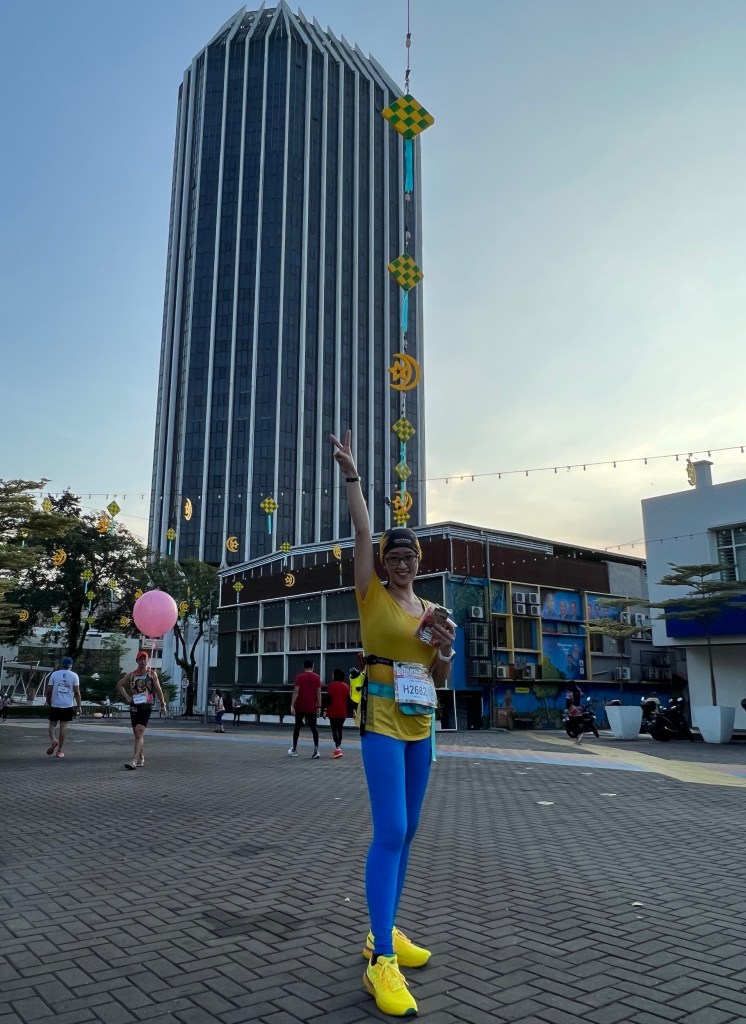
On Sunday, I ran the 10KM in the MWM 2023 race. The plan was always to take it easy and run slow. We were following a veteran runner’s advice that to run faster, we must first run slower. As counter-intuitive as it seems, there is apparently some science behind it – as I discovered when I finally looked it up instead of taking it at face value.
Despite running slow, I still struggled at the end. My pelvic floor was suffering and my abdomen was cramping – almost as if I had my period. I wondered about the reasons for it. I did a B2B spin class the day before which isn’t something I would ordinarily do the day before a race. I figured I was running slow so I didn’t think it would be so bad. Was I being reckless? Or maybe my “slow” wasn’t slow enough? I have clearly overestimated my abilities. Perhaps one class should have sufficed.
So how slow should I have been running? According to Marathon Handbook, it should be:
- Slow enough to feel really easy.
- A conversational pace.
- 60% to 75% of Maximum Heart Rate.
- 60-90 seconds per kilometer slower than your goal race pace goal pace.
In the example they gave: “If you are training to run at 5k in 24 minutes (7:45 pace), your easy runs should be at 9:15-9:45 pace.”
So how did I go? This is my official timing results:
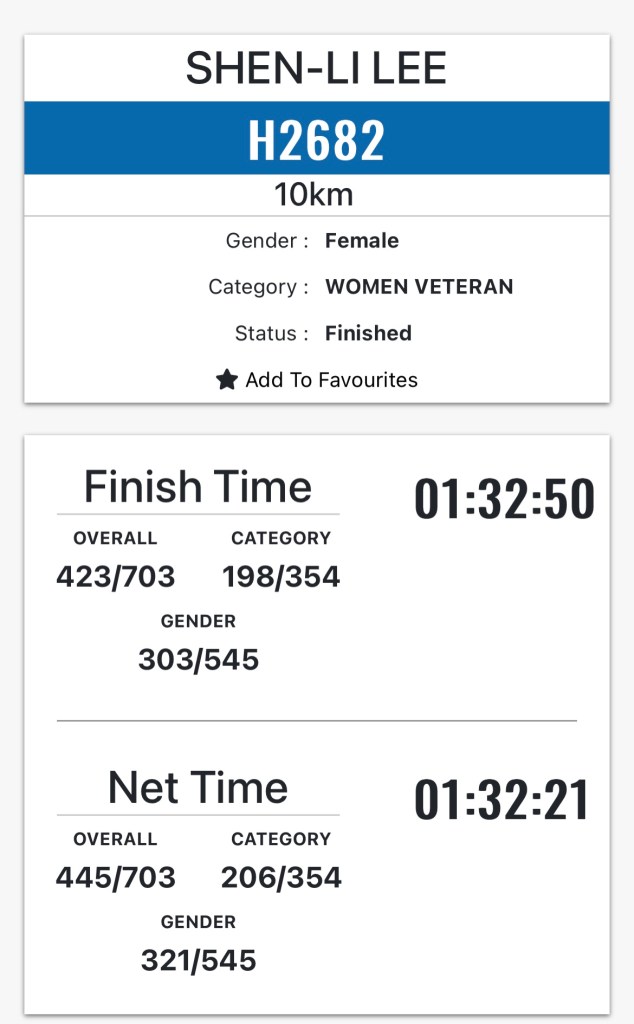
According to Strava, my average pace was 9:12 min/km. 5k in 24 minutes sounds a bit fast for me so I was definitely running a bit too fast for a slow run. The theory for “run slow to run fast” seems sound so let’s keep trying that for now and see if it helps me get a PB this year at SCKLM.
My previous race timings:
- SCKLM 2018: 1:12:31
- SCKLM 2019: 1:08:36
- Score 2022: 1:16:01
- Coway 2022: 1:14:01
- SCKLM 2022: 1:11:37
My goal this year is to beat my 2019 SCKLM results. Will I make it? We’ll see.
Discover more from Aletheiaphysis
Subscribe to get the latest posts sent to your email.

One thought on “Race Reviews”